Site of a Roman burial ground in the Feldgasse
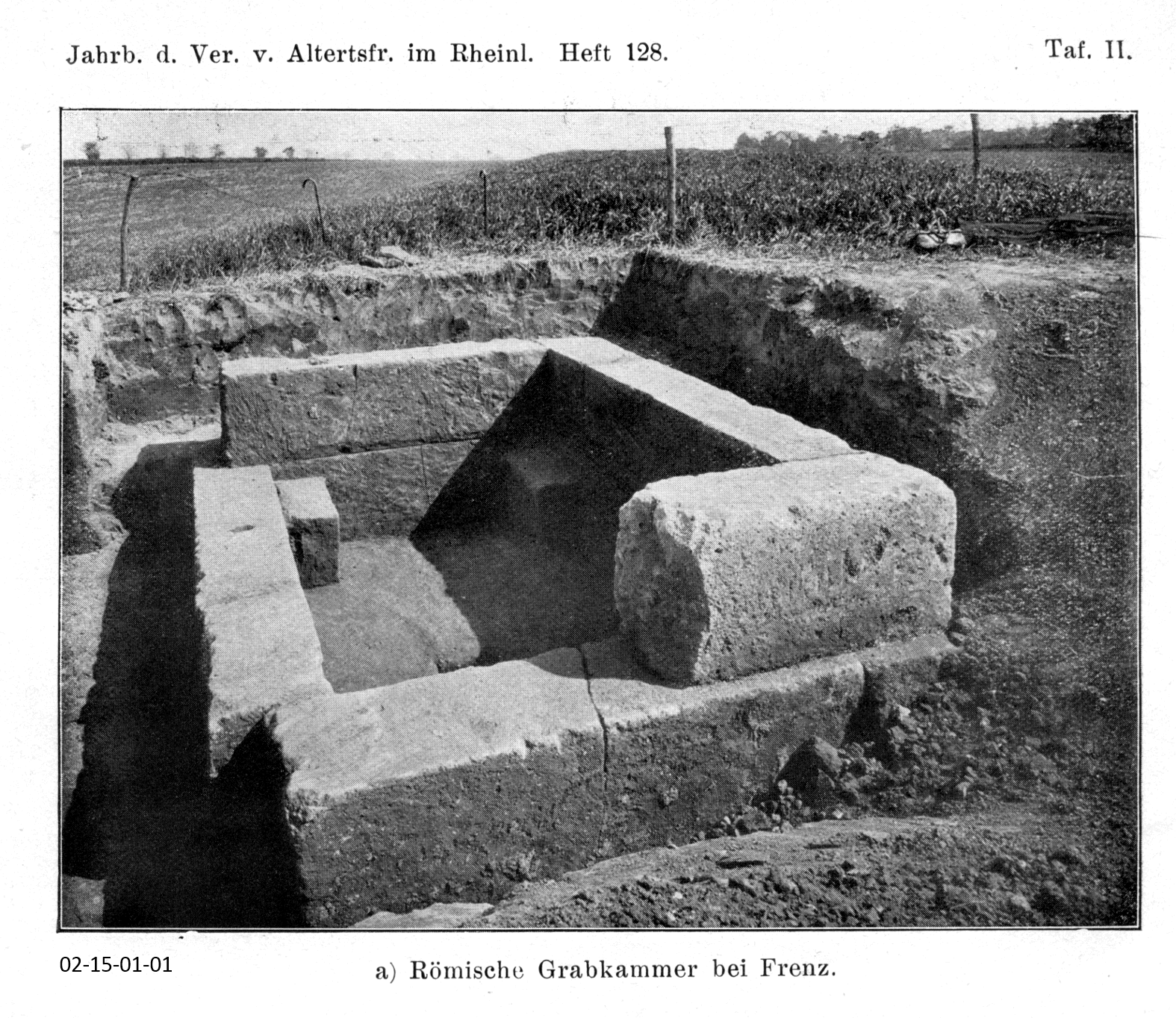
In April 1921, a Roman burial ground was discovered during road works near the Eschweiler-Jülich road. In addition to a skeletal grave, the remains of two larger funerary monuments were uncovered.
Just over two metres away, a carefully walled rectangular chamber made of large tufa blocks measuring 2.75 by 1.95 metres was found (see adjacent photo of the site).
This was probably a vaulted substructure of a funerary monument, which will have contained the burial in its cavity.
In the rubble above and next to the two monuments, remains of many small sculptures made of limestone and red-grey sandstone were found, e.g. parts of an over-life-size lion, obviously originating from the funerary decoration.
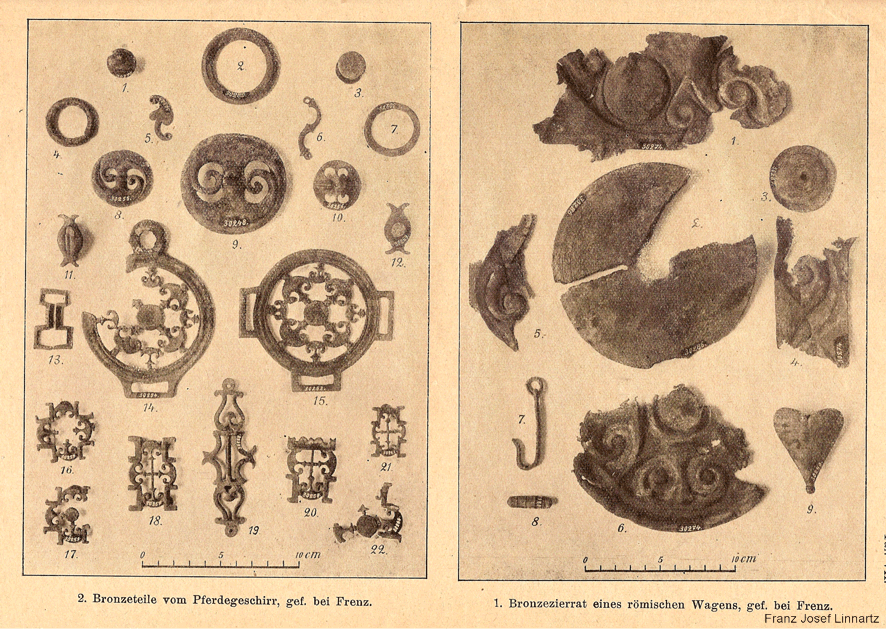
On the outer wall of the ashlar chamber, a mighty two hundredweight lump of iron and bronze parts of a magnificent chariot, baked and rusted together with earth, was excavated, which suggests a chariot burial with simultaneous cremation.
The age and type of the finds can be dated to the period between Emperor Trajan (98 – 117 AD) and Emperor Aurelian (270 – 275 AD).
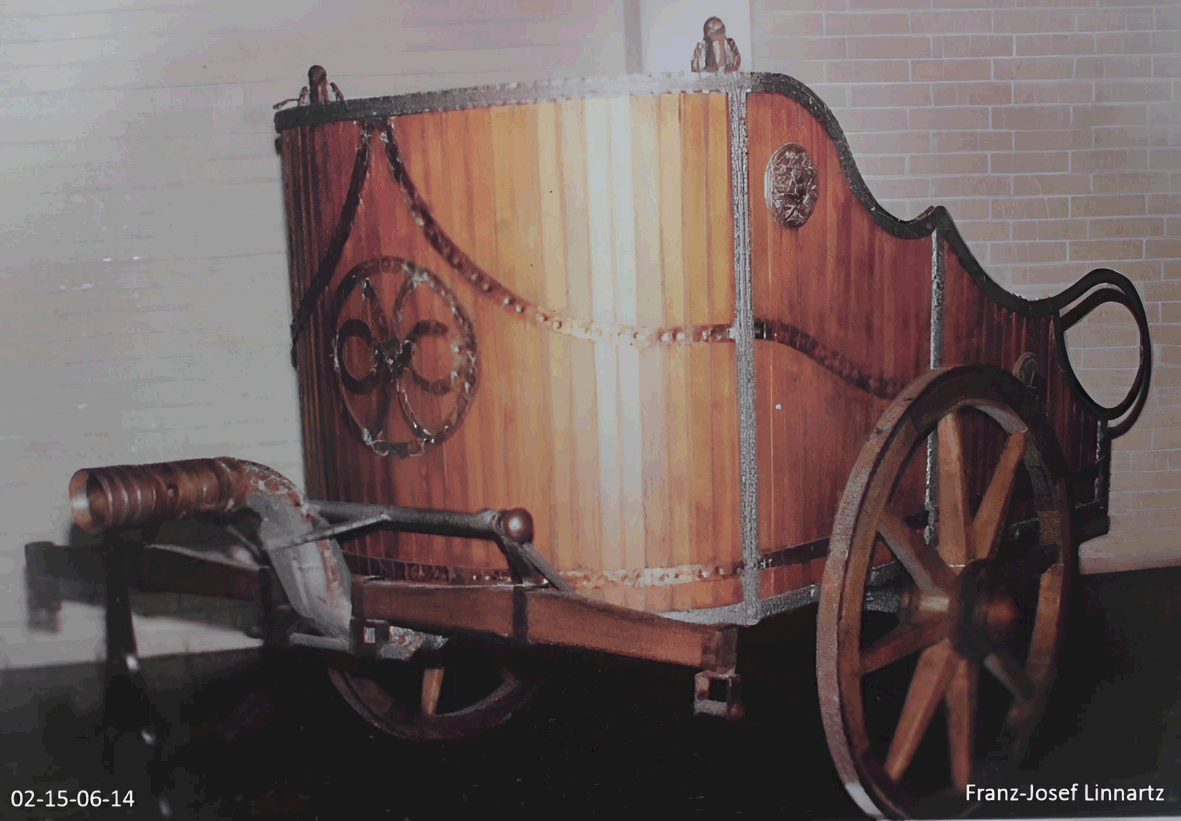
In 1974, the Frenzer Schützenbruderschaft participated in the historical procession of the Inden Schützenbruderschaft on the occasion of its 550th anniversary with a replica of this Celtic-Roman chariot.
The replica was made in the training workshops of the then Rheinbraun AG. Hubert Wichmann, Heinrich Breuer and Manfred Emonds from Frenz played a decisive role.