From lignite to electricity
As early as 1956, the former Roddergrube AG (later Rhein-Braun AG; today RWE-Power AG) began developing the Inden I open-cast lignite mine near Frenz.
This brought considerable taxes into the coffers of the municipality of Frenz, which was still an independent municipality until the municipal reorganisation in 1974, but also a lot of trouble and problems for the village due to strip roads, noise and dust pollution.
As a result of the planned lignite mining, some of the farmers in Frenz had to give up more than half of their agricultural land, thus losing the best soils.
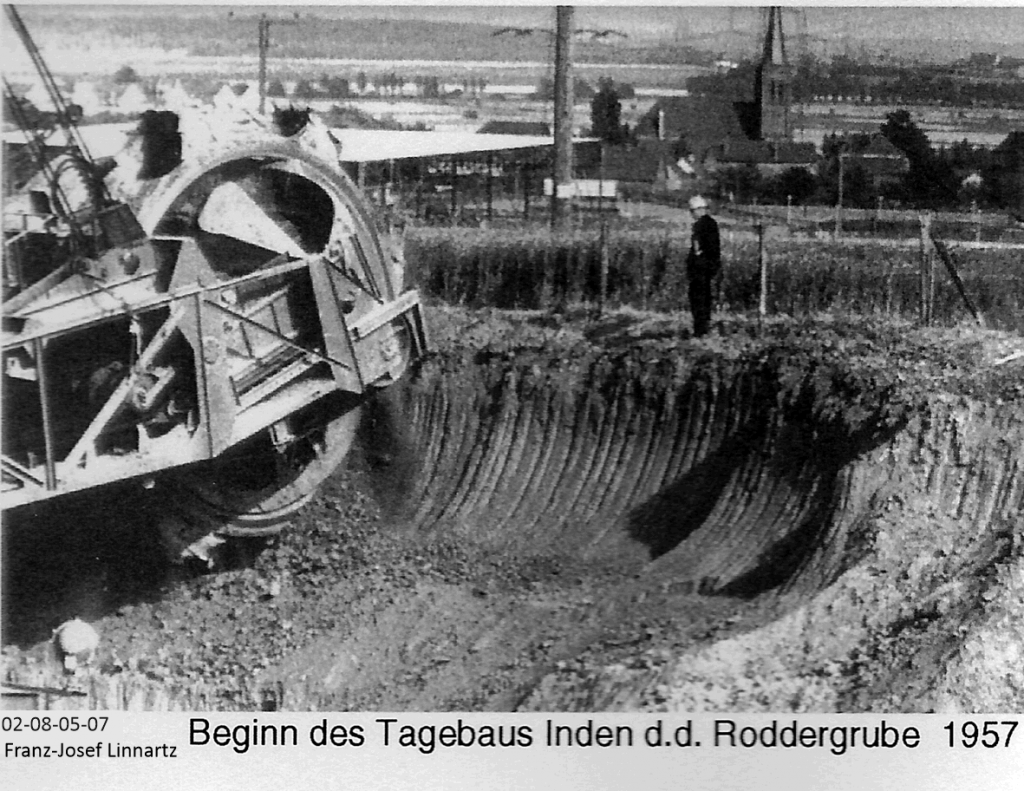
The photo from 1958 shows a spoil excavator making the first cut into the Inden opencast mine opposite the village of Frenz.
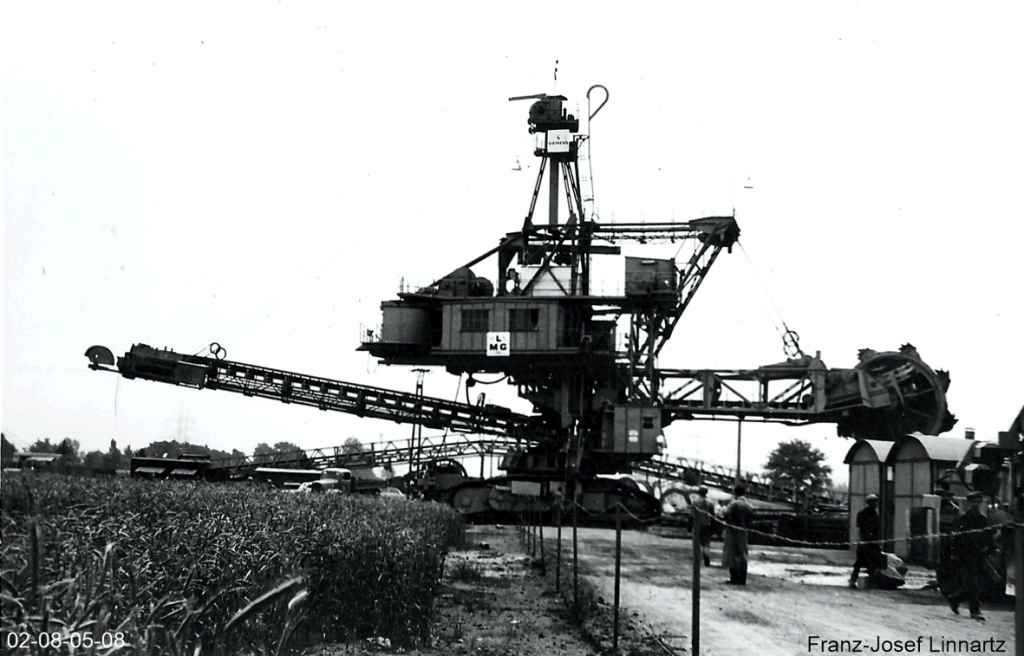
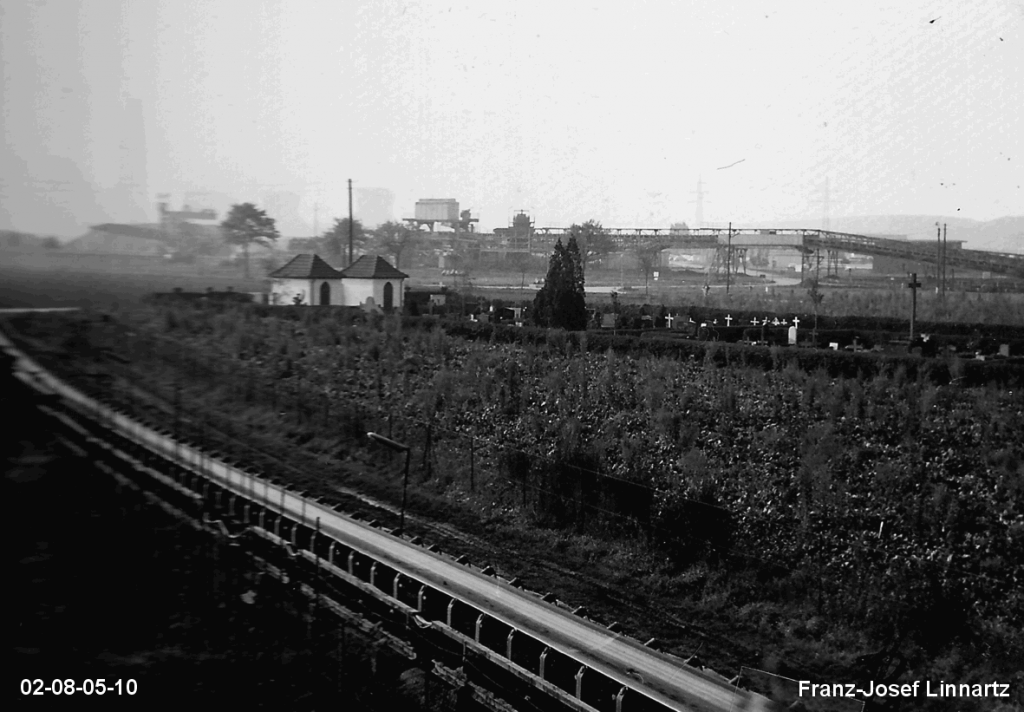
The large-scale equipment (excavators and spreaders) needed to mine the earth and coal were built along the district road from Weisweiler to Inden.
Initially, the open-cast mine’s sole aim was to meet the briquette factories‘ demand for raw coal, but with the steady demand for electrical energy due to the economic upswing, the conversion of the extracted coal into electricity came more and more to the fore.
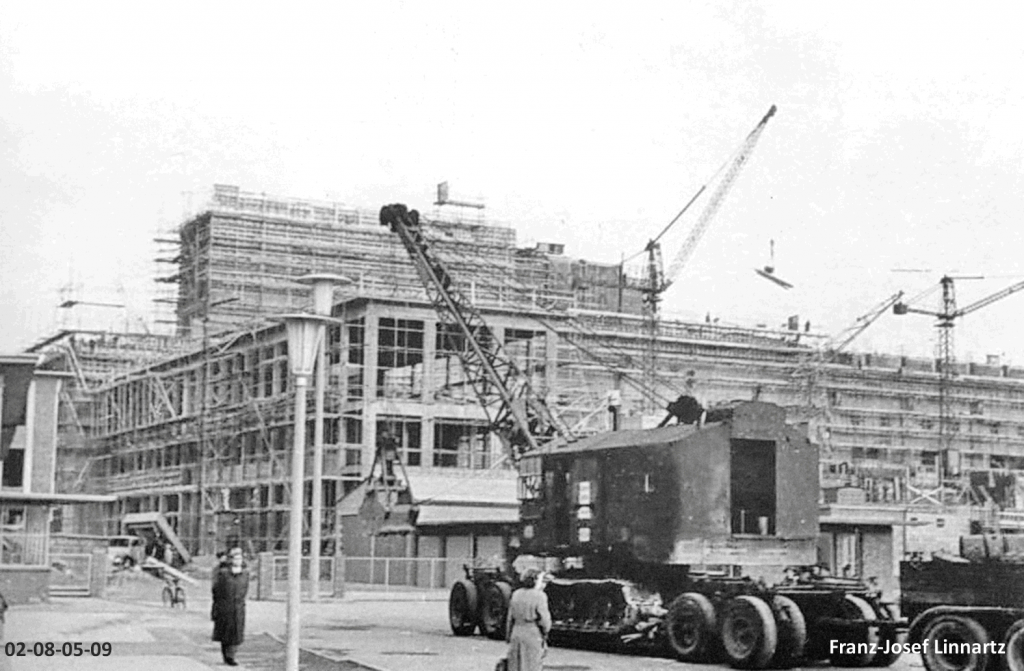
The photo from 1953 shows the shell construction work at the Weisweiler lignite-fired power plant.
It was therefore obvious to build a power station in the immediate vicinity of the opencast mine in order to be able to process the amount of raw lignite into electricity.
Even if the operators of lignite-fired power plants are currently coming under increasing criticism due to exhaust gas and particulate matter pollution, one must not forget that they have secured jobs and family incomes for many decades, as well as promoting village culture and customs in many ways.
According to the federal government’s plans, the power plant is to be gradually decommissioned by 2030. The open-cast mine, which will have been closed by then, is to serve as an artificial lake and, with an area of 1150 hectares, will be about as large as Lake Tegernsee.