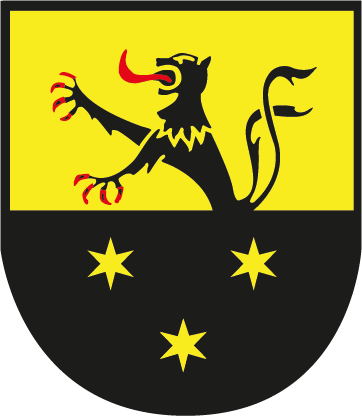
The 6 manors of the lordship of Frenz
The property of the noble lords of Frenz included 6 so-called manors (inherited only by male heirs), one of which was in the former Pattern (near Aldenhoven), the former Dolmannshof.
The other five manors located within the dominion of Frenz were:
the Goltsteinhof, the Schönwedderhof, the Mouchmannshof (also called Zehnthof) and the Rüttgershof (according to the Mann- und Lehenbuch from 1530 probably a double farm). Not all of the locations have been clearly handed down and can be determined. However, those of the Goltsteinhof and the Schönwedderhof are described in more detail at the location of their respective sites.
The Goltstein Farm
The origin of the von Goltstein family is not exactly known. According to history, they came from Jülich, Cologne or the Kleve area. They are said to have been resident in Frenz as early as the 15th century.
At least for the period from 1600 to 1650, a Lamersdorf church register shows that the Goltstein family was enfeoffed with the Frenz farm.
Johann Friedrich Meinhard Philipp von Goltstein (born 1719, died before 1762) is named as the owner of Frenz and Merödgen.
His son, Friedrich Wilhelm Alexander, Baron von Goltstein (born 1750, d. 1795) is also named as the owner of the farm in Frenz, along with Merödgen, Beeck, and Mahrhof. His successor was probably Carl Niclas Philipp Wilhelm, Baron von Goltstein (born 1790, d. 1868).
It is at least proven that Carl, Baron von Goltstein, was mayor of Lamersdorf (to which Frenz belonged at that time) and Pier from 1821 to 1849 and prevented the construction of a new school in Frenz during his time as mayor.
He went down in history, however, because he was the first to discover lignite while digging a well on the Lucherberger Berg in 1819 and began to mine it in 1821. The former mining area of about 189 ha has since been called the „Goltsteingrube“.
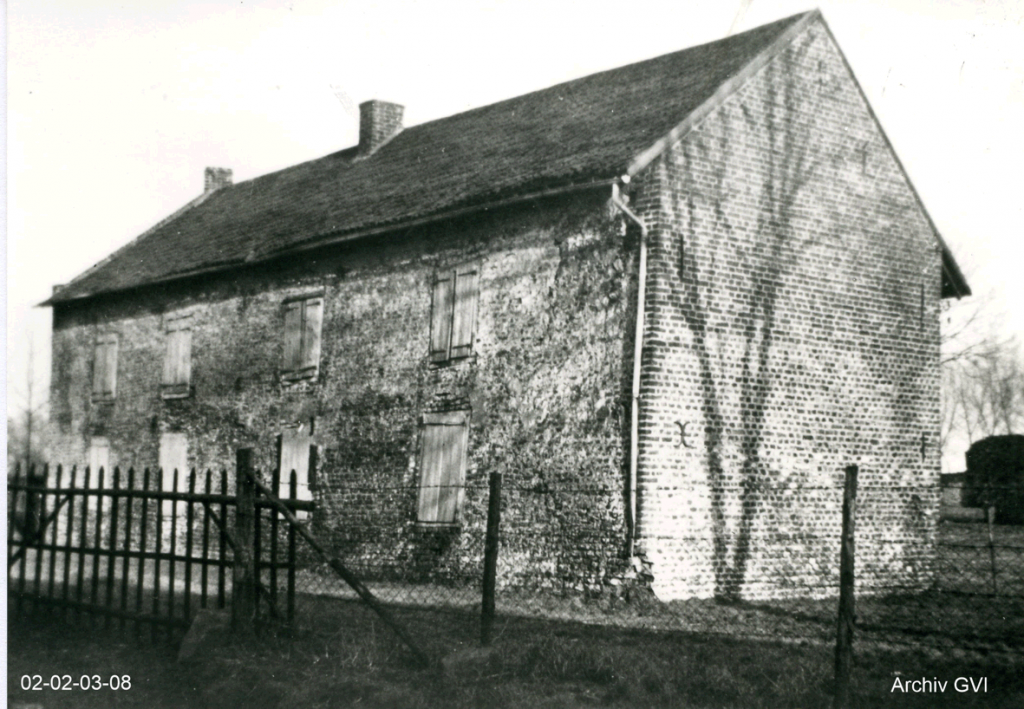
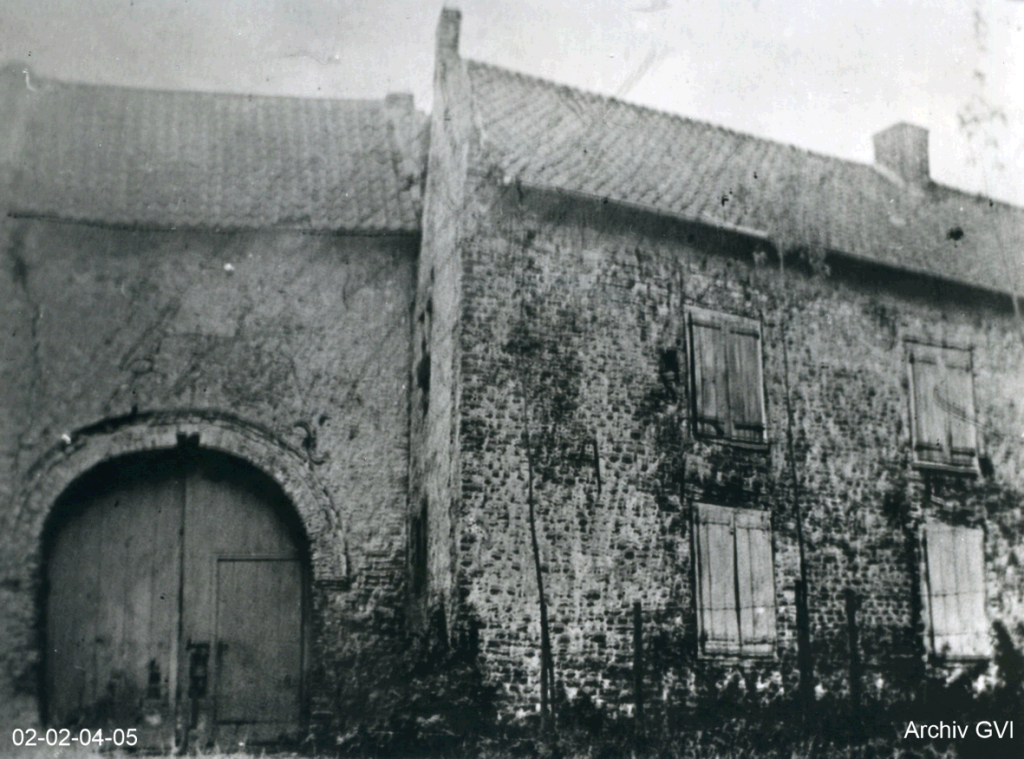
Afterwards, long-time tenant of the bachelor Wilhelm Kurth was. The old Goltsteinhof was inhabited for many years after Wilhelm Kurth by a bachelor, pensioner Josef Geich. After Geich’s death, the farm was demolished in 1935.
The courtyard, which was newly built in its place after the war and later expanded to include the left part of the building, is now owned by the Havertz family and is maintained by the spouses Hanno and Elke Havertz.