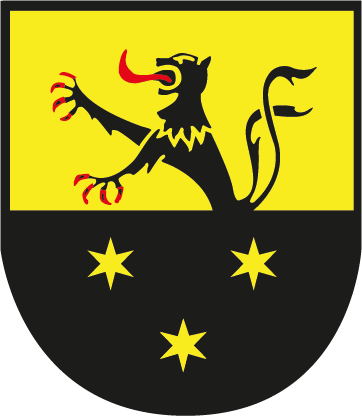
Bonsdorf Pesch Pommenich Verken and Vilvenich
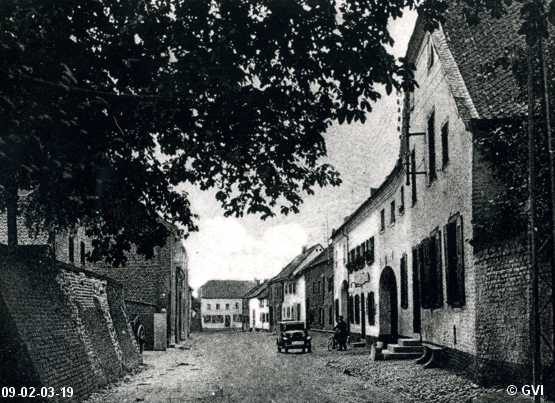
On the left the wall of the Bonsdorf cemetery
The formerly independent village of Bonsdorf was the part of the village of Pier comprising Bonsdorfer Straße, Jakobstraße and Haus Pesch. The village is thought to have emerged from the noble manorial estate of Haus Pesch. As early as 1306, Bonsdorf is recorded as the independent parish of St Ursula. Until 1806, Oberkrauthausen, situated on the other side of the River Rur, also belonged to the parish. The respective owners of Haus Pesch exercised the right of patronage. In 1806, the parish of Bonsdorf was dissolved and merged with Pier.
Following the death of the last parish priest of Bonsdorf, the church was demolished in 1844. Burials took place in the surrounding cemetery until 1947; it was closed in 1950 and deconsecrated in 1970.
Haus Pesch held the right of patronage over the parish of St Ursula in Bonsdorf. The house of the former knight’s estate, which was originally surrounded by moats, dated from the 16th to the 18th century.
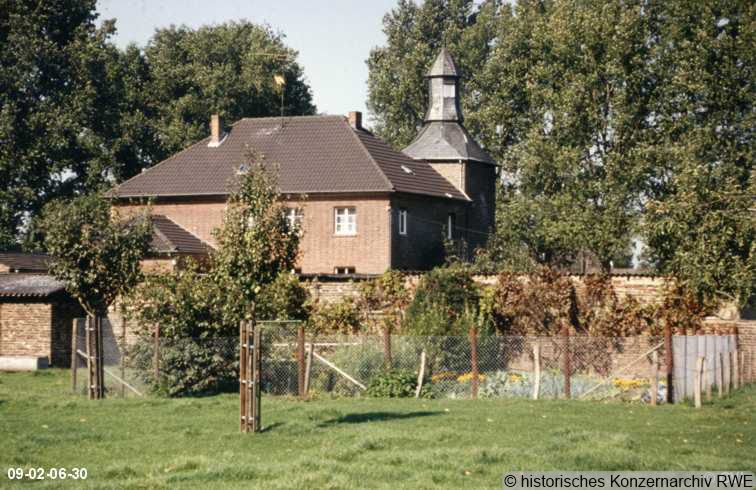
During the Second World War, the complex was severely damaged and was rebuilt in a simpler form after the war. From 1908 until the resettlement, it was a privately owned farm.
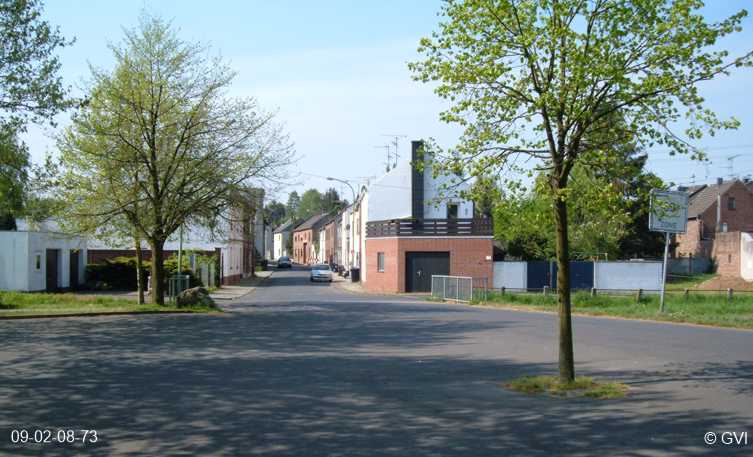
Pommenich, originally an independent hamlet, was first mentioned in 1374. Pommenicher Straße formed the heart of the village. The Pierer sports ground was also located here.
Haus Verken was first mentioned in 1131. Towards the end of the 16th century, the Vercken family converted to Protestantism, making the estate one of the cradles of Protestantism in the Düren-Jülich region. From the end of the 18th century, Haus Verken was heavily in debt; by 1868, large tracts of land had to be sold off to pay off the debts, and the main castle fell into complete disrepair. In 1913, a farmer and brickworks owner from Pommenich purchased the dilapidated estate.
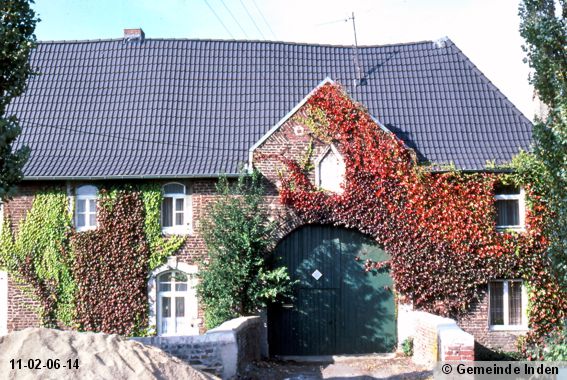
Ten years later, the villa-style residence was built. The outer bailey, which had been provisionally repaired, continued to be used as a farm for several more decades. The Swart company ran a nursery with a garden centre here but was forced to cease operations as part of the resettlement programme.
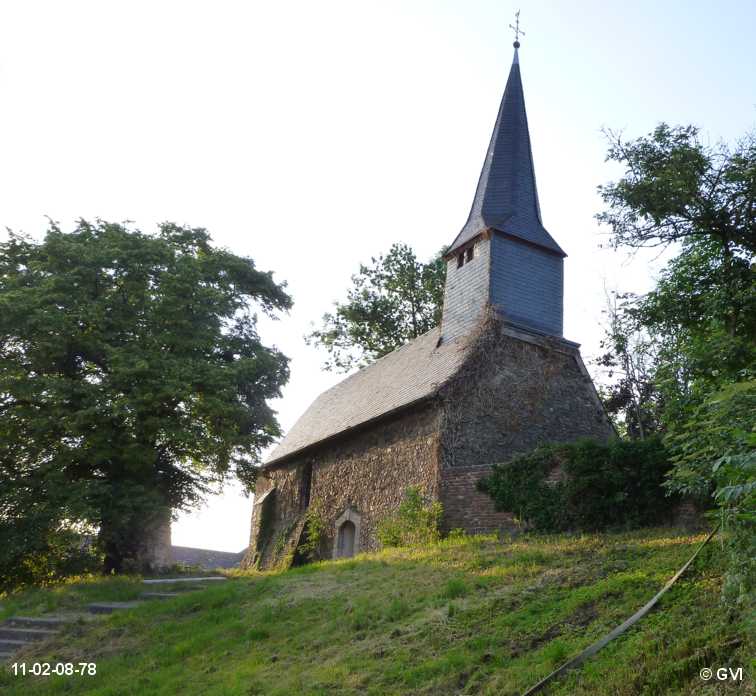
Vilvenich consisted of just one road, which merged into the cattle track leading to the Rur meadows. There are no documentary records regarding the foundation of St Helena’s Chapel. The chapel stood on manorial land belonging to the estate and was incorporated into its surrounding wall. The former ducal tithe farm had been an agricultural holding from the early 19th century until the resettlement.