Agriculture
The municipality of Inden is situated in the Jülich-Zülpich plain, which, with its loess soils, is one of the most agriculturally productive regions in Germany. This situation explains why, prior to 1970, there were around 167 (!) agricultural holdings in the districts of Inden, 90 of which were in Inden (32), Altdorf (25) and Pier (33) alone. Compared to today, these were mostly smallholdings. 43 per cent had a farm area of less than 15 ha, a large proportion of which was leased land. In addition, there were farms on the fringes of opencast mining areas, for example in Schophoven, which, whilst not losing their farmsteads to opencast mining, did lose their agricultural land. The small size of the farmers’ plots can be attributed to the practice of equal division of land, i.e. land ownership was divided equally amongst all eligible heirs in the family upon inheritance. With each inheritance, the size of the landholdings thus decreased. In contrast, there was the right of primogeniture, which was predominantly practised by Protestants to ensure that the farm remained intact. Land ownership was bequeathed to a single heir.
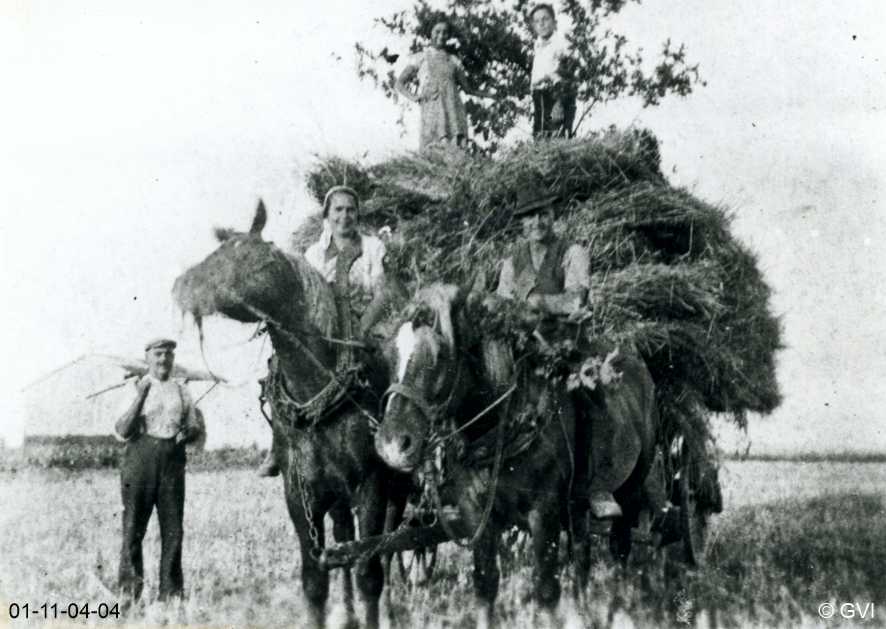
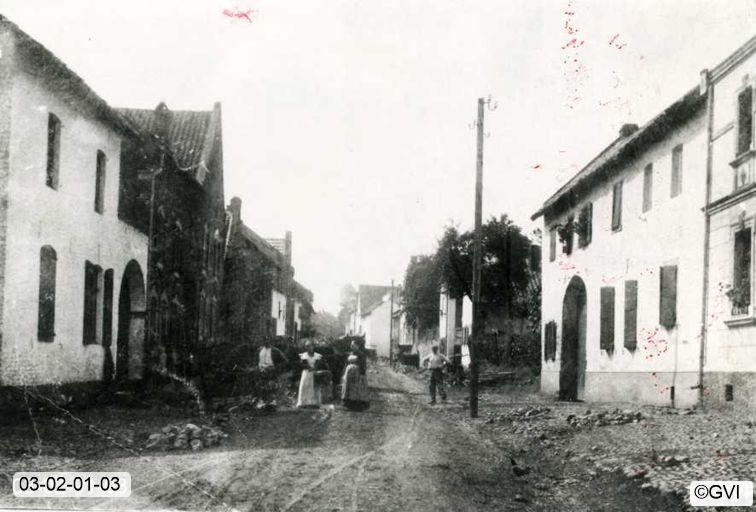
Agriculture was particularly affected by opencast mining, as the expansion of the opencast mine led to the temporary or even permanent loss of agricultural land. In the municipality of Inden, almost all agricultural land was taken over – over a period of 40 years. Although the mining operator was required to provide replacement land to safeguard livelihoods, there was not enough land available. The few, lower-quality plots of reclaimed land created during the recultivation process could not be made available to all agricultural holdings.
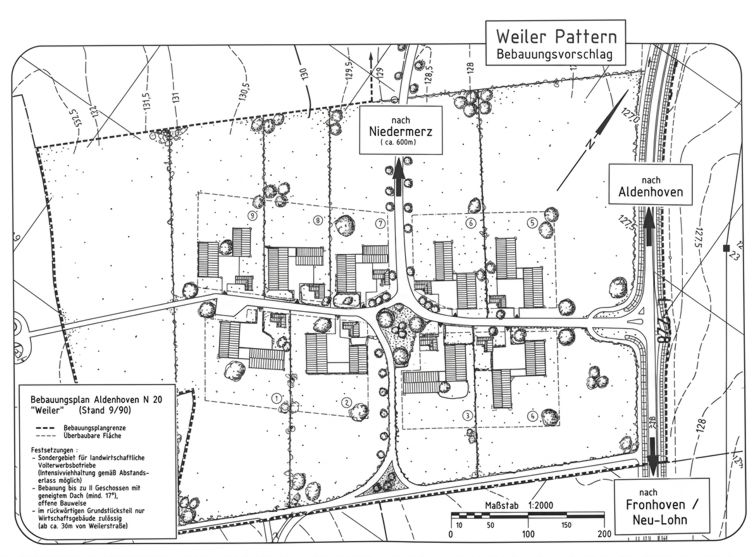
The hamlet of Pattern in the Aldenhoven municipal area (formerly the Inden I opencast mine) – later renamed the hamlet of Hausen – was established around 1990. A settlement for only around 10 full-time farming businesses, which were able to continue their operations on the new land. For several years, the farmers cultivated their land in both the new and old settlements until the land was reclaimed for mining. The hamlet offers no social infrastructure for its residents; no shops, no church or anything of the sort. In contrast to the old villages, none of the farms now keep livestock, a situation undoubtedly also attributable to agricultural reform (the abolition of milk quotas, large farm sizes, etc.).
The temporary use of agricultural land was compensated for by the mining operator through what is known as ‘lease termination compensation’. Seven farmers sought replacement farms in the surrounding area (Weilerswist), whilst two moved to Schleswig-Holstein and Saxony respectively.
For many farms – particularly the smaller ones – the situation was, however, hopeless. Sixteen gave up farming due to generational succession. Solutions had to be found for the tax implications of ceasing operations and for pension provision. Some found employment with the mining operator.
Others set up part-time farming operations here in Inden/Altdorf, meaning they pursued a different main occupation and only stored their equipment in the halls so that they could farm the few remaining plots of land in the surrounding area. Livestock farming was ruled out under environmental protection legislation due to the neighbouring residential development. Today – 30 years later – these sheds are for the most part no longer used for farming. Some have converted them into blocks of flats, whilst others have developed their open spaces into building land.